Did you know coffee beans are actually seeds? They’re the pits of a cherry that grows on coffee trees!
#CoffeeFacts #CoffeeSeeds #FromCherryToCup #RamblerScramblerCoffee

Welcome
Thanks for rolling in and parking it for a quick sec. Ready to have a blast? Buckle up and get ready to either cruise along like a chilled-out sloth or rev up that engine and zoom like a speed demon. It's your call, my friend. So kick back, relax, and savor every moment of this wild ride!
Did you know coffee beans are actually seeds? They’re the pits of a cherry that grows on coffee trees!
#CoffeeFacts #CoffeeSeeds #FromCherryToCup #RamblerScramblerCoffee

Brewing the perfect cup of coffee is both science and art. From water temperature to grind size, every detail matters. A finer grind extracts more flavor but can taste bitter if overdone. A coarser grind creates a lighter brew but risks under-extraction. The ideal temperature for brewing is between 195°F and 205°F to bring out the bean’s best notes. At Rambler Scrambler Coffee, we believe in brewing with care and precision—just like crafting the perfect muscle car. Experiment with brewing methods to find your favorite. Whether it’s a French press, pour-over, or espresso machine, every technique highlights a different aspect of the coffee. Remember, great coffee is worth the effort. Start your engine with a perfect brew every morning!
#CoffeeBrewing #BrewLikeAPro #CoffeeLovers #FromBeanToCup #RamblerScramblerCoffee
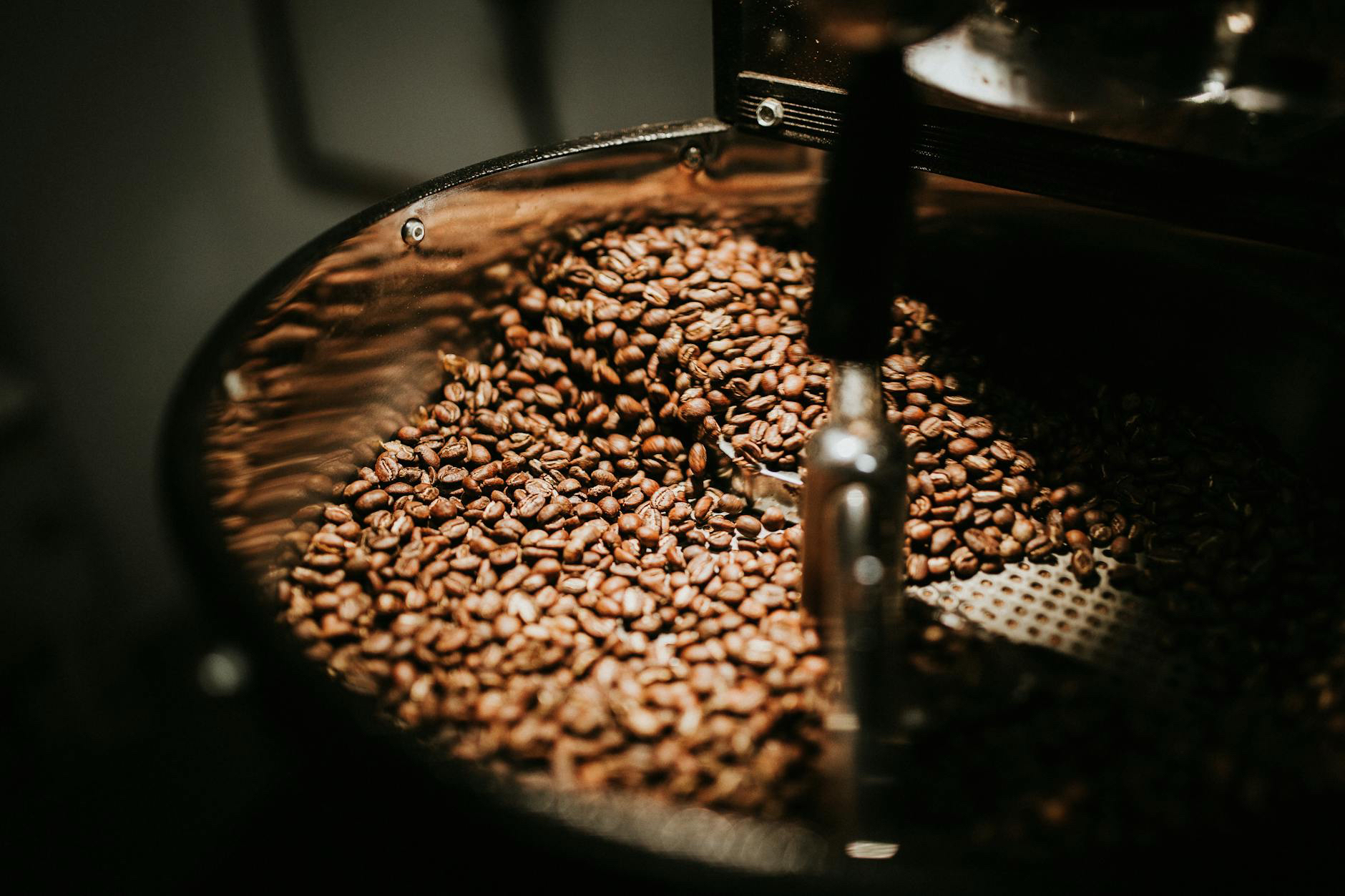
Coffee roasting is an art that brings out a bean’s unique flavors. A few minutes too long or too short can change the taste entirely!
#CoffeeRoasting #CoffeeFacts #FromBeanToCup #RamblerScramblerCoffee

Coffee’s journey starts on a tree, but it’s what happens next that makes all the difference. After being picked, the coffee cherry undergoes processing to extract the bean. There are two main methods: dry and wet. In the dry method, the cherries are spread out to dry in the sun, resulting in beans with fruity, bold flavors. The wet method, on the other hand, uses water to remove the fruit, yielding a cleaner, brighter cup. At Rambler Scrambler Coffee, we’re fascinated by how each process brings out unique characteristics in the beans. Much like how every car tells a story, every cup of coffee speaks of its origin and processing. And just as every muscle car demands precision engineering, great coffee demands attention to detail. So here’s to celebrating craftsmanship—whether it’s behind the wheel or in the cup!
#CoffeeProcessing #CoffeeEducation #RamblerScramblerCoffee #FromBeanToCup #CoffeeCraftsmanship

The coffee cherry takes nearly a year to mature after flowering. Patience is key for the perfect cup!
#CoffeeFacts #FromBeanToCup #RamblerScramblerCoffee #CoffeeLovers

Coffee’s journey starts on a tree, but it’s what happens next that makes all the difference. After being picked, the coffee cherry undergoes processing to extract the bean. There are two main methods: dry and wet. In the dry method, the cherries are spread out to dry in the sun, resulting in beans with fruity, bold flavors. The wet method, on the other hand, uses water to remove the fruit, yielding a cleaner, brighter cup. At Rambler Scrambler Coffee, we’re fascinated by how each process brings out unique characteristics in the beans. Much like how every car tells a story, every cup of coffee speaks of its origin and processing. And just as every muscle car demands precision engineering, great coffee demands attention to detail. So here’s to celebrating craftsmanship—whether it’s behind the wheel or in the cup!
Be your own barista and use only the freshest and richest coffee grounds, or if you’re a purist, whole beans, for your delightful cup of coffee. Bon appétit ☕️❤️
☕️ramblerramblercoffee.com☕️

How does the origin of coffee beans impact their flavor profile?
The origin of coffee beans greatly impacts their flavor profile. Beans from Africa tend to have fruity and floral notes, while beans from Latin America often exhibit chocolatey and nutty flavors. Asian beans typically have earthy and spicy characteristics.